
Mount Vesuvius erupted in 79 BCE, near the towns of Pompeii and Herculaneum. The event killed thousands, displaced even more, and sent shockwaves throughout Roman society.
The city was covered by dust and ash for centuries upon centuries, until it was rediscovered in the 1700ʼs. The unique way the town was destroyed ended up preserving a treasure trove of archaeological evidence, frozen in dust and ash. Today Pompeii is one of the best resources for understanding daily life in ancient Rome.

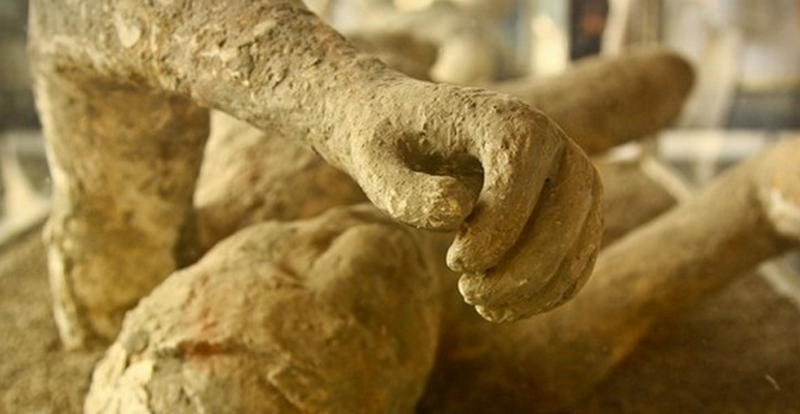
As archaeologists uncovered the long lost town they found impressions in the soil of Romans who were almost instantly buried in hot ash and dust.
Scientists have used plaster molds to capture the final moments of these doomed souls. While they died quickly, their last moments were in terror.


The plaster casts show haunting figures cowering in fear, attempting to cover their faces or trying to flee. The largest group of impressions were found in the remains of an orchard, which has been named “The Garden Of The Fugitives.” Today the plaster casts of the dead stand as a solemn reminder of what transpired.


Pompeii has yielded a plethora of artifacts from entire buildings, to clothing, household items, and even food vessels that would have been destroyed if they hadnʼt been frozen in the ash and dust. Only a fraction of the town has been excavated so far, and new bodies are continually being found. Today scientists use a more modern resin mold to capture the bodies.
Pompeii is now a UNESCO World Heritage Site and tourist attraction.